Library & Publications
Impact reports, lab books, cycle highlights, and reference documents from KLIC 2023 through 2025. All publications are freely available for download.
KLIC Evidence Base
Across previous KLIC cycles, countries and partners have produced impact reports, lab books, stakeholder notes and implementation commitments that document how innovation moves from dialogue to country-led execution. Each document type is designed for a specific audience and purpose.
Institutional references documenting KLIC cycle methodology, country results and implementation commitments — for Ministries, donors and partners needing comprehensive cycle evidence.
Access →Country-specific execution guides capturing lab outputs, 30–60 day implementation priorities, named owners and milestones — living documents for country teams and technical supporters.
Access →Practical notes on what countries can implement within 30–60 days using existing authority, staff and systems — targeted at Ministries of Health and national programme leads.
Access →Evidence and framing for donors and foundations on why implementation-focused investment — not fragmented pilots — produces durable health system results.
Access →Practical notes for UN agencies, multilaterals and technical organisations on supporting country-led execution without increasing fragmentation or parallel systems.
Access →Guidance for innovators and manufacturers on how health systems assess adoption, fit, integration and sustainability — and what country-led validation really means.
Access →Reflections on how community actors identify missed populations, build trust and keep Health Justice grounded in frontline and lived realities across KLIC cycles.
Access →Structured briefs from KIA sessions capturing insights, country perspectives, and actionable recommendations — supporting peer learning and accountability between cycles.
Access →Latest · KLIC 2025
The definitive account of the 2025 KLIC cycle — country outcomes, KIA results, lab findings, and systemic lessons. The most comprehensive KLIC publication to date. Available in English and French.
The 2025 edition of the KLIC Lab Book — a living execution guide covering all Knowledge & Innovation Labs from the 2025 cycle. Country teams use this as their primary 90-day execution reference.
Knowledge Assets · KIA 1–11
Eleven Knowledge Innovation Agora sessions distilled into structured knowledge briefs. Each document captures session insights, country perspectives, and actionable recommendations for health innovation.
Full Archive
Video Library
Official teaser for the 2025 KLIC cycle. Country voices, innovation labs, and execution in focus.
First recap of the 2025 cycle — Knowledge Labs, day-one sessions, and country delegations.
Official highlight reel of the 2024 cycle covering labs, KIA sprints, and cycle closing.
Videos are stored locally. Place MP4 files in the videos/ folder to enable playback.
KIA Sessions · Recordings
Full recordings of past KIA online sessions. KIA #5, #8 and #10 recordings are unavailable.
The inaugural KIA session — setting the stage for the Knowledge Innovation Agora format with country teams and partners.
Reaching zero-dose children in conflict zones and remote areas — Mali, DRC drone logistics, Benin VacciForm platform, and AI as a workforce multiplier.
Addresses the under-financed crisis of biomedical waste from vaccination — sharps, plastics, cold chain emissions and integration into Gavi FPPs.
Data quality reform, collaborative intelligence platforms, and practical AI tools to close the leadership capacity gap in EPI programmes.
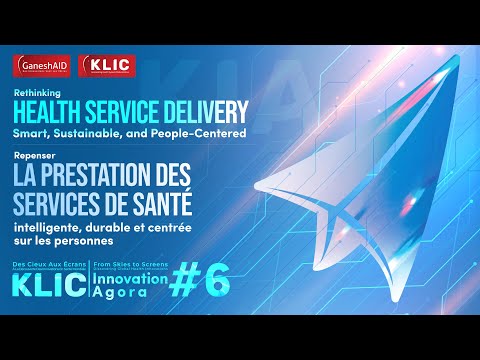
National equity intelligence systems to make zero-dose children visible — fragmented data, AI bias, community trust, and VaxyReach as applied tool.
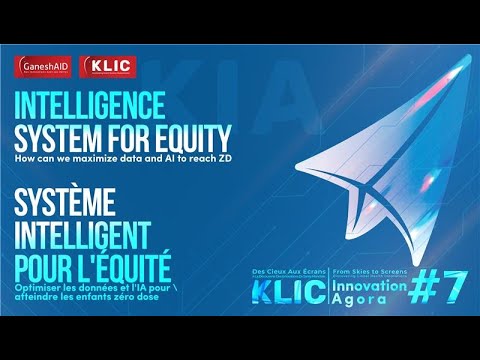
Deepens the equity intelligence framework — AI bias safeguards, community trust-building, and VaxyReach deployment perspectives from country teams.
Foundational Document
A landmark commitment by country delegations at the 2025 KLIC Summit to accelerate country-led health innovation execution across Sub-Saharan Africa and Southeast Asia.
Why It Was Needed
Despite decades of global health frameworks, country health systems continued to face a persistent gap between policy commitment and operational execution. The Hanoi Declaration was forged in response to this challenge — recognising that meaningful change requires structured, country-owned pathways backed by shared accountability.
What It Stands For
Signed by country representatives across twelve nations, the Declaration affirms three core principles: that health innovation must be country-led; that execution requires continuous capacity, not one-off interventions; and that donor and technical partners must align behind national roadmaps rather than parallel systems.
Download the Hanoi Declaration (PDF)How to Cite
KLIC. (2025). KLIC 2025 Impact Report: Knowledge Lab for the Innovation Community — Cycle 2025 Outcomes and Systemic Lessons. Cotonou: KLIC. Available at: https://klic.ganeshaid.com/downloads/KLIC2025-Impact-Report-EN.pdf